Understanding the Importance of Electrical Gauges in Marine Operations

Why Cheap or Incorrect Sensors Can Create Expensive Problems Later
July 4, 2026
Replacing Old Caterpillar Gauges: What Equipment Owners Should Check
July 24, 2026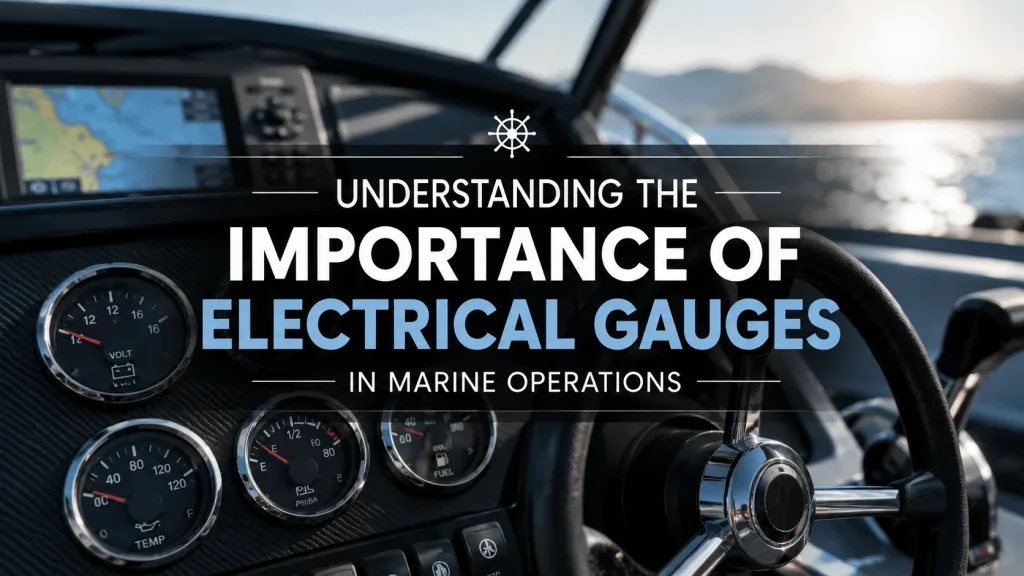
You know that moment when the engine sounds fine, the water looks calm, and everything seems to be running exactly as it should?
That’s often when people stop watching the dashboard.
But a small change may already be happening. The battery voltage could be slowly dropping. The engine temperature might be creeping upwards. Or the oil pressure needle may be sitting slightly lower than usual.
Nothing dramatic. Not yet.
And that’s exactly why electrical gauges matter.
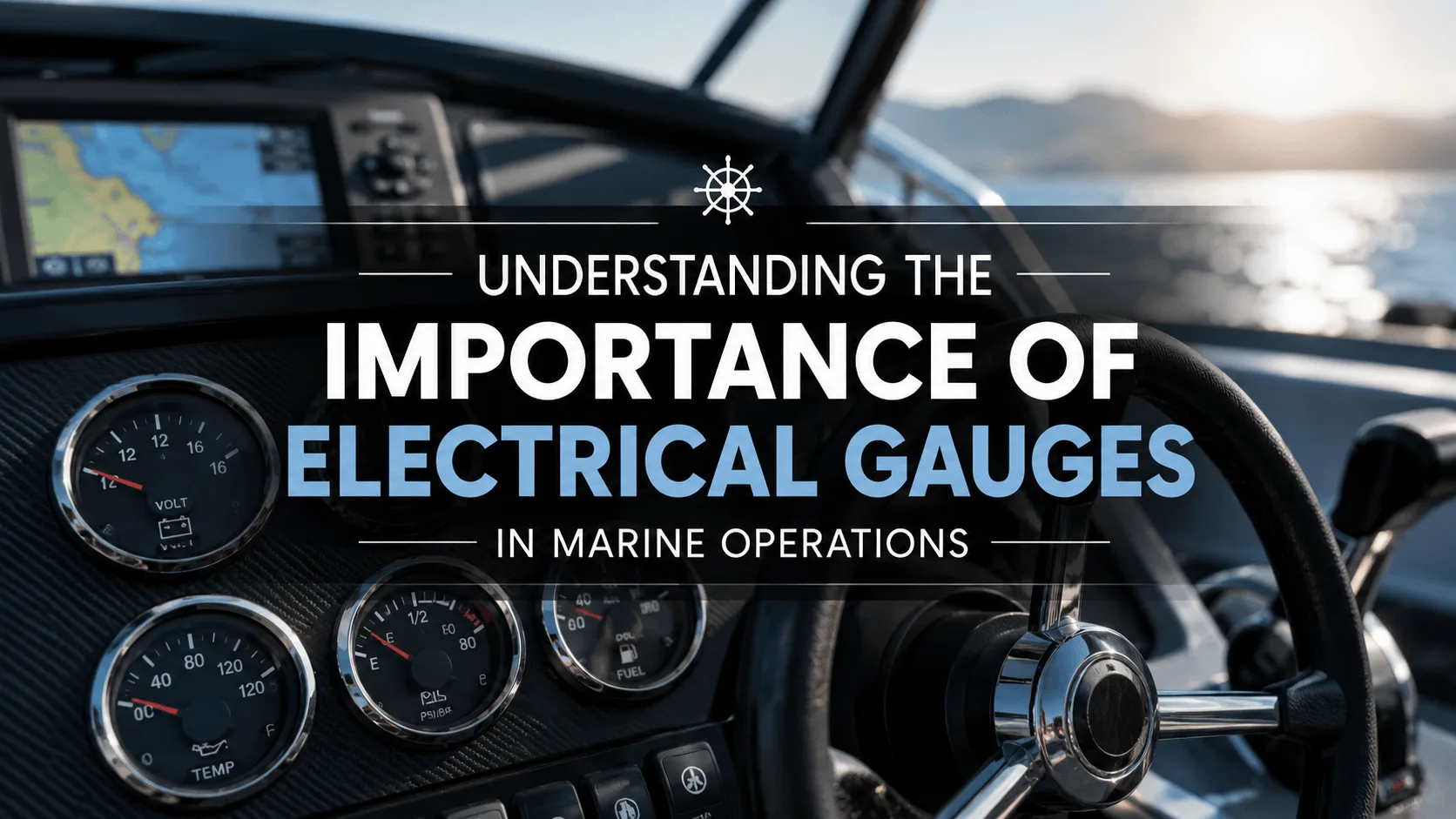
They give you a window into what’s happening inside your vessel before a minor issue turns into an engine shutdown, electrical failure or expensive trip back to shore.
For recreational boat owners, that means greater confidence on the water. For commercial marine operators, it can mean protecting schedules, equipment, passengers, crew and revenue.
Let’s look at how these gauges work, what they monitor and why choosing the right ones makes such a difference.
Table of Contents
- Introduction
- What Are Electrical Gauges on a Boat?
- Why Electrical Gauges Matter in Marine Operations
- Essential Electrical Gauges for Marine Vessels
- Electrical Gauges Are Only as Reliable as Their Senders
- Why Marine-Grade Construction Matters
- Analog or Digital: Which Is Better?
- Warning Signs That a Gauge System Needs Attention
- How to Keep Marine Electrical Gauges Reliable
- Choosing the Right Electrical Gauges for Your Boat
- Reliable Information Creates Safer Decisions
- Frequently Asked Questions
What Are Electrical Gauges on a Boat?
Electrical gauges are dashboard instruments that receive information from a sender, sensor or electrical circuit and display that information for the operator.
Think about it this way: the sensor is the messenger, the wiring carries the message, and the gauge tells you what it means.
Depending on the system, an electrical gauge may monitor:
- Battery voltage
- Electrical current
- Engine oil pressure
- Coolant or water temperature
- Fuel level
- Engine speed
- Trim position
- Tank levels
- Operating hours
Some gauges use a traditional needle and dial. Others display the information digitally. Modern multifunction displays may bring several readings together on one screen.
But the purpose remains the same: giving you accurate information while there’s still time to act.
Why Electrical Gauges Matter in Marine Operations
A boat’s engine and electrical system can’t explain what’s wrong in plain English.
Usually, the first warning is a reading.
A needle moves. A number begins fluctuating. A gauge that normally sits in one position suddenly behaves differently.
Ignoring that change is a bit like ignoring a warning light in a car while driving through an area with no phone reception. You might get away with it. Or you might wish you’d stopped five minutes earlier.
They provide an early warning
Many mechanical and electrical problems develop gradually.
A weakening battery may still start the engine several times before it finally fails. A cooling-system blockage may cause temperature to rise slowly rather than immediately. Low oil pressure might first appear as an occasional dip before becoming a serious lubrication problem.
Electrical gauges help you catch these changes early.
And early is good. Early usually means more options, less damage and a much calmer conversation with the marine technician later.
They help protect the engine
Oil pressure and engine temperature are two of the most important readings on a vessel.
The oil-pressure gauge helps show whether the engine’s moving components are receiving adequate lubrication. If pressure falls outside the engine manufacturer’s recommended range, continuing to run the engine could lead to increased friction, heat and internal damage.
The temperature gauge performs a similar warning role. A rising reading may point towards restricted water flow, low coolant, a worn impeller, a blockage or another cooling-system issue.
The gauge won’t always tell you the exact cause. But it tells you that something has changed.
That’s often all you need to know to reduce the load, shut the engine down safely or begin checking the system.
They support reliable electrical power
Modern vessels depend heavily on electricity.
Navigation equipment, communication systems, pumps, lighting, refrigeration, alarms and engine-starting systems may all rely on the vessel’s batteries and charging system.
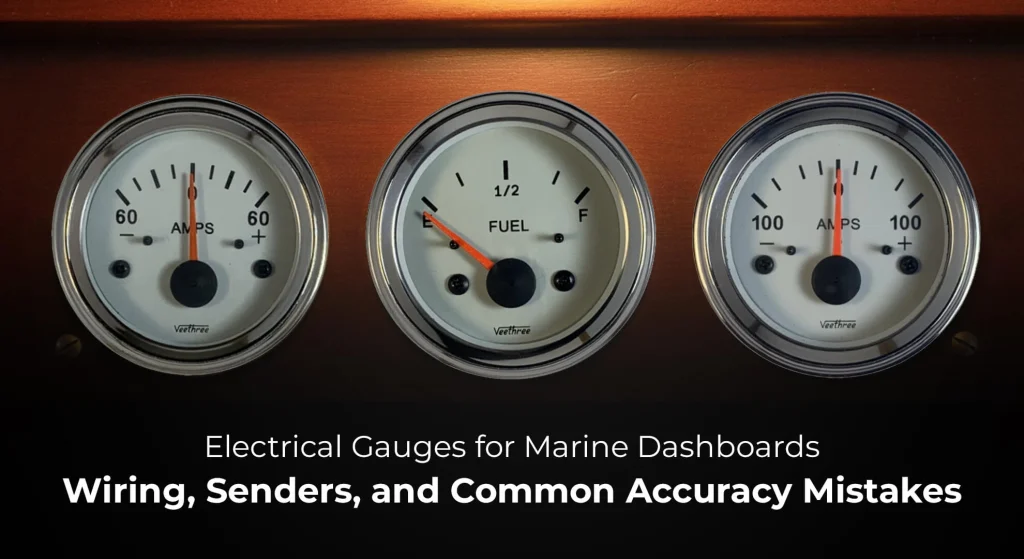
A marine voltmeter helps you monitor voltage levels and recognise unusual drops or charging behaviour. An ammeter, depending on the electrical setup, can show whether current is flowing into or out of the battery system.
And honestly, a power problem at the marina is annoying. A power problem several nautical miles offshore is something else entirely.
They improve operational decisions
Good decisions depend on good information.
When your gauges are working correctly, you can make more confident choices about engine load, fuel use, battery condition and whether a trip should continue.
This becomes especially important for commercial operators. A reliable reading can help the skipper decide whether an issue needs immediate attention, whether the vessel can return safely or whether maintenance should be scheduled before the next job.
Without trustworthy gauges, those decisions become guesswork.Essential Electrical Gauges for Marine Vessels
Every vessel is different, so there isn’t one perfect dashboard layout for everyone.
A small recreational boat won’t require the same monitoring arrangement as a passenger vessel, fishing boat or workboat. Still, several electrical gauges are commonly useful across marine applications.
1. Voltmeter
A voltmeter displays the voltage within the electrical system.
It can help you monitor battery condition and check whether the charging system appears to be operating normally. The exact reading you should expect depends on the vessel’s electrical setup, battery type, operating condition and manufacturer’s specifications.
That last part matters.
Rather than memorising a generic number from the internet, learn what normal looks like on your own vessel. Watch the reading before starting, while cranking, when the engine is running and when major electrical equipment is switched on.
A reading that suddenly behaves differently from its usual pattern deserves attention.
2. Ammeter
An ammeter measures electrical current.
Depending on how it is installed, it may help show whether the battery is being charged or whether onboard equipment is drawing more current than expected.
This is particularly useful when diagnosing charging issues or unusual electrical loads. But correct installation is essential because the instrument must suit the current range and electrical configuration of the vessel.
When there’s any uncertainty, have the system checked by a qualified marine electrician.
3. Oil-Pressure Gauge
The oil-pressure gauge monitors pressure within the engine’s lubrication system.
A sudden pressure drop is one of those readings you shouldn’t “watch for a little while” and hope it fixes itself. It may indicate low oil, a leak, a sender problem, a blocked passage, pump trouble or internal engine wear.
Sometimes the fault is electrical rather than mechanical. A damaged wire or failing sender can produce an incorrect reading.
But until the cause is confirmed, treat an abnormal oil-pressure reading seriously.
4. Engine-Temperature Gauge
The engine-temperature gauge helps you see whether the engine is remaining within its recommended operating range.
Engines produce heat. That’s normal.
But when the cooling system can no longer remove enough of that heat, temperatures rise. Catching the increase early may help prevent warped components, damaged seals, loss of power or an unexpected shutdown.
Watch the pattern, not just the final number. If the gauge normally settles at one position and begins sitting noticeably higher, investigate the change.
5. Fuel-Level Gauge
Running low on fuel is inconvenient in a car. On the water, it can become a genuine safety issue.
A fuel gauge helps with trip planning, refuelling decisions and day-to-day fuel management. But fuel readings on boats can move as the vessel changes angle, accelerates or travels through rough conditions.
That’s why the reading should be considered alongside your known fuel consumption, trip distance and previous usage.
And never forget the sender. The fuel gauge and sender must be electrically compatible. If their resistance ranges don’t match, the dashboard may show an inaccurate level even though both components appear to be working.
6. Tachometer
A tachometer displays engine revolutions per minute, commonly called RPM.
It helps the operator understand how hard the engine is working and whether it is operating within the manufacturer’s recommended range.
Unexpected changes in RPM can also help identify issues involving load, throttle response, propeller performance or engine operation.
For twin-engine vessels, matching engine speeds can also contribute to smoother and more balanced performance.
Electrical Gauges Are Only as Reliable as Their Senders
This part is easy to overlook.
People sometimes replace a gauge because the reading looks wrong, only to discover that the original problem was the sender, wiring, terminal or ground connection.
The gauge doesn’t directly measure fuel level, temperature or pressure by itself. It interprets the electrical signal it receives.
That means the complete system matters:
- The sender must be suitable for the application
- The gauge and sender must use compatible resistance ranges
- Wiring must be correctly sized and connected
- Ground connections must be secure
- Terminals must be protected from corrosion
- The gauge must match the vessel’s system voltage
Installing a new gauge with an incompatible sender can create convincing but completely incorrect readings.
And that’s arguably worse than having no reading at all, because inaccurate information creates false confidence.
Why Marine-Grade Construction Matters
A standard dashboard instrument may look perfectly acceptable in the box.
Then it meets salt spray, humidity, vibration, sunlight, temperature changes and the occasional wave that seems determined to reach every electrical component onboard.
Marine environments are rough on equipment.
That’s why marine gauges should be designed with appropriate protection against moisture and corrosion. Features such as non-corrosive housings, suitable terminals, waterproof construction, sealed components and fog-resistant lenses can help gauges remain readable and reliable over time.
Visibility matters too. A gauge should be easy to read in bright daylight, low light and changing weather conditions. Illumination is especially useful during early departures, night operations or poor visibility.
A cheap gauge that becomes cloudy, corroded or unreliable after repeated exposure isn’t really cheap. You just pay for it later.
Analog or Digital: Which Is Better?
There’s no universal winner here.
Analog gauges are familiar, simple to scan and good at showing movement. You can often recognise a changing trend from the needle’s position without reading an exact number.
Digital gauges provide precise numerical information and may combine several readings in a more compact dashboard layout. Multifunction displays can also reduce clutter and present engine and vessel data in one place.
The better choice depends on:
- The age and design of the vessel
- Available dashboard space
- Existing senders and wiring
- The information you need to monitor
- Daylight and night-time visibility
- Your preferred display style
- Compatibility with the engine or network
Some operators prefer individual gauges because each reading has its own permanent position. Others like the clean layout and flexibility of a digital display.
What matters most is reliability, readability and compatibility—not whether the dashboard looks modern.
Warning Signs That a Gauge System Needs Attention
Gauge problems aren’t always obvious. Some fail completely, but others become unreliable gradually.
Watch for:
- A needle that jumps or flickers
- Readings that change when lights or other equipment are switched on
- A gauge that remains at zero
- A gauge that immediately moves to maximum
- Fog or moisture behind the lens
- Dim or uneven illumination
- Readings that don’t match normal vessel behaviour
- Corroded, loose or damaged terminals
- Different readings from instruments monitoring the same system
- A fuel reading that stays fixed despite continued use
Intermittent faults can be particularly frustrating because the gauge may behave normally at the dock and start fluctuating once vibration increases.
Don’t simply assume the gauge itself is faulty. Check the sender, wiring, power supply, fuse and ground connection as part of the diagnosis.
How to Keep Marine Electrical Gauges Reliable
Gauge maintenance doesn’t have to become a major project.
A few practical checks can make a real difference.
Learn your normal readings
Take note of the usual oil pressure, temperature, voltage and RPM during normal operation.
That baseline makes it easier to recognise small changes before they become serious.
Inspect wiring and terminals
Look for loose connections, damaged insulation, corrosion and signs of overheating.
Pay particular attention to ground connections because a poor ground can cause unstable or misleading readings across multiple gauges.
Keep the dashboard dry and clean
Marine gauges may be designed to handle difficult conditions, but reducing unnecessary exposure still helps.
Avoid spraying cleaning products directly into gauge edges or electrical switches. Use products suitable for marine dashboards and instrument lenses.
Test readings after maintenance
After electrical work, sender replacement, engine servicing or dashboard changes, confirm that the gauges respond normally before relying on them during a trip.
Investigate changes promptly
A reading doesn’t have to reach the red zone before it matters.
A gradual change from the vessel’s normal pattern may be the first useful clue. Write it down, take a photograph or note when it occurs. That information can make troubleshooting much easier.
Choosing the Right Electrical Gauges for Your Boat
Before ordering a replacement or upgrading the dashboard, check the technical details carefully.
Consider:
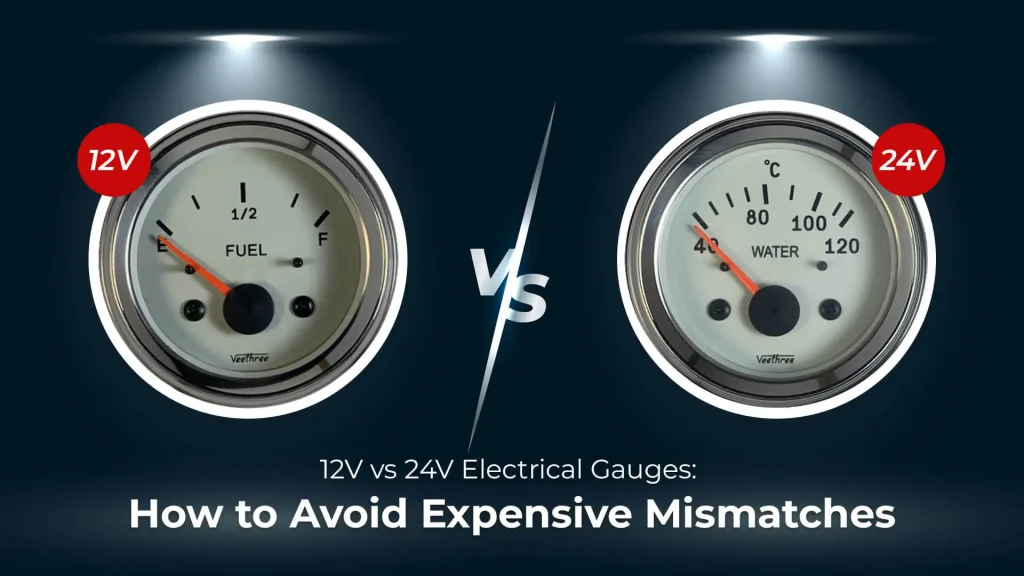
- System voltage, such as 12V or 24V
- Required measurement range
- Sender type and resistance curve
- Single-station or multi-station operation
- Gauge diameter and mounting depth
- Existing dashboard cut-out
- Terminal and wiring arrangement
- Illumination requirements
- Marine protection and construction
- Dial colour, bezel and visibility
- Compatibility with the engine or vessel network
Don’t choose based only on appearance.
A gauge can fit the dashboard beautifully and still be wrong for the sender, voltage or measurement range. When specifications aren’t clear, ask before installing it.
That small conversation can save hours of fault-finding.
Reliable Information Creates Safer Decisions
Electrical gauges don’t replace regular servicing, pre-departure checks or professional inspections.
They aren’t magic either.
What they do is provide timely information. And on the water, timely information is incredibly valuable.
A lower-than-normal voltage reading may encourage you to check the charging system before the battery fails. Rising engine temperature may prompt you to reduce the load and inspect the cooling system. A pressure change may help you stop the engine before further damage occurs.
Small warnings. Better decisions.
That’s the real importance of electrical gauges in marine operations.
Veethree offers a broad range of electrical gauges, marine gauges, digital instrumentation, senders and associated parts for different vessel requirements. Whether you’re replacing a single instrument or planning a complete dashboard upgrade, start with the technical specifications of your vessel and choose components designed to work together.
Because when you’re out on the water, you don’t just need a dashboard that looks good.
You need one you can trust.
Frequently Asked Questions