How Marine Gauges Contribute to Safe and Efficient Boating

How Salt, Moisture, and Corrosion Affect Electrical Gauge Accuracy
June 18, 2026
Why Cheap or Incorrect Sensors Can Create Expensive Problems Later
July 4, 2026
The small dials that can save a big day on the water
You know that moment when you’re out on the water, everything feels calm, the engine is humming, the sky looks kind, and for a second you think, this is exactly why I own a boat.
Then something changes.
Maybe the engine note feels a little different. Maybe the fuel level looks lower than you expected. Maybe the temperature starts creeping up, but you’re not sure if it’s serious or just your imagination doing its usual overthinking thing.
That’s where marine gauges quietly earn their place.
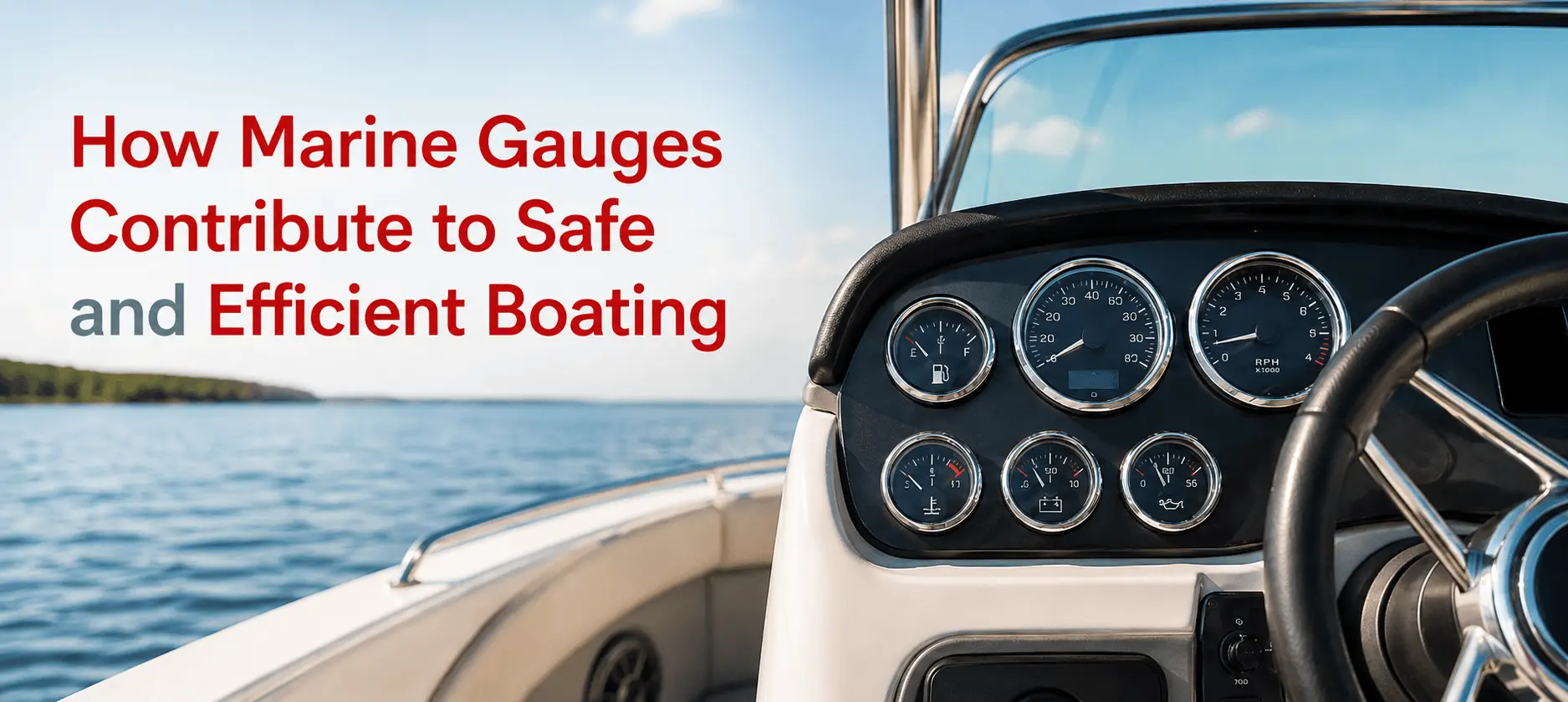
They’re not the loudest part of the boat. They don’t get the same attention as the engine, the seats, the sound system, or the shiny new electronics. But honestly, they’re one of the most important parts of your whole setup.
Because marine gauges tell you what your boat is trying to say before it turns into a problem.
And when you’re on the water, early warning matters.
Table of Contents
- The small dials that can save a big day on the water
- What are marine gauges, really?
- Marine gauges help you spot problems early
- Better fuel monitoring means better trip planning
- Temperature gauges protect your engine
- Oil pressure gauges give you engine confidence
- Speedometers and tachometers help with efficient boating
- Voltage gauges help protect your electrical system
- Trim gauges make handling smoother
- Clear gauges reduce stress at the helm
- Marine gauges support better maintenance
- Why quality matters in marine gauges
- Which marine gauges should a boat have?
- Marine gauges make boating more efficient, not just safer
- Choosing marine gauges in NZ
- Final thoughts
- Looking for reliable marine gauges in NZ?
- FAQs
What are marine gauges, really?
Marine gauges are the instruments on your boat’s dash or helm that show you what’s happening with key parts of your vessel.
Think fuel level. Engine temperature. Oil pressure. Speed. RPM. Battery voltage. Trim position. Sometimes hourmeter readings too.
On land, if your car starts acting strange, you can usually pull over. On the water, it’s not always that simple. You might be dealing with wind, tide, distance, limited phone signal, or other people on board who are relying on you to get back safely.
So, your gauges become your first line of information.
Not guesswork. Not “I think it’ll be fine.” Actual readings.
And that’s a big deal.
Marine gauges help you spot problems early
Most boating problems don’t come out of nowhere.
Usually, there are signs. Small ones.
A temperature gauge climbing higher than usual. An oil pressure gauge sitting too low. A voltmeter showing your battery isn’t charging properly. A fuel gauge telling you the tank isn’t as full as you thought it was.
These things can feel minor at first. Easy to ignore.
But on a boat, minor can become expensive. Or dangerous. Or just deeply inconvenient when you’re trying to enjoy a weekend and now, you’re stuck waiting for help.
A good marine gauge gives you time to react.
For example, if your engine temperature starts rising, you can slow down, check for cooling issues, and avoid pushing the engine harder. If oil pressure drops, you know something needs attention before serious engine damage happens.
It’s like having a quiet mate at the helm saying, “Hey, maybe check this before we keep going.”
Better fuel monitoring means better trip planning
Fuel gauges are one of those things you only fully appreciate when they’re accurate.
Because running low on fuel on the water is not the same as running low on fuel on the road. There’s no service station around the corner. No quick five-minute stop.
A reliable marine fuel gauge helps you plan your trip properly. You can understand how much fuel you have, how much you’re using, and whether you’ve got enough to get back with a comfortable margin.
And yes, that margin matters.
Boating conditions can change quickly. A relaxed run out might become a heavier return if the wind picks up or the water gets choppy. Your engine may work harder, and fuel use can climb faster than expected.
That’s why fuel monitoring isn’t just about convenience. It’s part of safe boating.
When your fuel gauge is doing its job, you’re not guessing. You’re making smarter decisions.
Temperature gauges protect your engine
An engine running too hot is never something to ignore.
Your marine temperature gauge helps you see when the engine is staying within a safe operating range. If it starts climbing, you can take action before the issue gets worse.
Maybe there’s a cooling system problem. Maybe there’s a blockage. Maybe the engine is working harder than usual.
Whatever the cause, the gauge gives you a heads-up.
And honestly, that’s the whole point. It helps you catch the story while it’s still being written, not after the ending has already cost you a repair bill.
For boat owners, marine temperature gauges are especially useful because engines work in demanding conditions. Salt air, moisture, long runs, changing loads, and heat all play their part.
A clear temperature reading helps you protect the engine and keep your day from turning into a headache.
Oil pressure gauges give you engine confidence
Oil pressure is one of those readings that might not seem exciting, but it’s incredibly important.
Your engine needs proper oil pressure to keep moving parts protected. If pressure drops too low, it can mean lubrication isn’t happening properly. And when that happens, engine damage can follow quickly.
A marine oil pressure gauge helps you monitor that pressure in real time.
It doesn’t need to be complicated. You don’t have to be a marine engineer to understand the basic idea. If the reading is sitting where it normally does, good. If it suddenly drops or behaves strangely, something needs checking.
That simple visibility can make the difference between a quick inspection and a major repair.
Speedometers and tachometers help with efficient boating
Safe boating is one part of the story. Efficiency is the other.
Marine speedometers and tachometers help you understand how your boat is performing while you’re underway.
A speedometer shows how fast you’re moving. A tachometer shows engine RPM. Together, they help you find a smooth, efficient cruising range instead of constantly pushing the engine harder than needed.
Here’s what I mean.
Sometimes, a small change in throttle can reduce fuel use without making much difference to your actual travel time. But you only really notice that when you’re paying attention to speed and RPM.
The gauges help you feel the boat better.
Over time, you start learning what “normal” looks like. The right cruising speed. The RPM range your engine seems happiest in. The way fuel use changes when conditions shift.
That knowledge makes you a better, calmer, more efficient boater.
Voltage gauges help protect your electrical system
Modern boats rely on electrical systems more than ever.
Navigation lights. Radios. Pumps. Fish finders. GPS units. Charging systems. Cabin lights. Accessories.
A marine voltage gauge helps you keep an eye on battery condition and charging performance. If voltage is too low, you may be dealing with a weak battery or charging issue. If it’s not behaving normally, you can investigate before you lose power to something important.
And let’s be real, electrical issues on the water are stressful.
A voltmeter gives you one more layer of confidence. Not because it fixes the issue for you, but because it gives you information early enough to do something about it.
Trim gauges make handling smoother
A trim gauge shows the angle of your outboard or stern drive.
That might sound like a small thing, but trim affects how the boat sits in the water, how it handles, and how efficiently it runs.
When trim is set well, the boat can feel smoother, more balanced, and easier to control. When it’s not, you might use more fuel, ride rougher, or lose performance.
A trim gauge helps you make small adjustments with more confidence.
And once you understand how your boat responds, those adjustments start feeling natural. Less fighting the boat. More working with it.
Clear gauges reduce stress at the helm
This part doesn’t get talked about enough.
Good gauges don’t just protect the boat. They protect your peace of mind.
When your dash is clear, easy to read, and set up properly, you feel more in control. You can glance down, understand what’s happening, and keep your focus on the water.
That matters.
Especially when conditions change. Or when you’ve got family on board. Or when you’re coming back later than planned and the light is starting to fade.
A messy or unreliable dashboard makes everything feel harder. A clear one makes boating feel calmer.
Simple as that.
Marine gauges support better maintenance
Marine gauges also help with long-term care.
When you know your normal readings, you can spot changes earlier. Maybe your engine is running slightly warmer than it used to. Maybe oil pressure behaves differently at idle. Maybe voltage isn’t recovering the way it should.
These little patterns can tell you when something needs attention.
It’s not about becoming obsessed with every number. Nobody wants boating to feel like homework.
But paying attention to your gauges helps you maintain your boat before problems become bigger and more expensive.
An hourmeter can also help you track engine use for servicing. Instead of guessing when maintenance is due, you’ve got a clear reference point.
That makes it easier to look after the boat properly.
Why quality matters in marine gauges
A boat is not a gentle place for instruments.
There’s moisture. Vibration. Sun. Salt air. Heat. Movement. Sometimes all in the same afternoon.
That’s why marine gauges need to be built for the conditions they’ll actually face. A gauge that looks fine in the box but struggles in harsh marine environments won’t help much when you really need it.
Quality marine gauges should be easy to read, reliable, and suited to the application. The right gauge should also match the right sender or sensor, because incorrect matching can lead to inaccurate readings.
And inaccurate readings are almost worse than no readings at all, because they give you false confidence.
So when choosing boat gauges, don’t only think about appearance. Yes, a clean dash looks great. But function comes first.
Always.
Which marine gauges should a boat have?
The right setup depends on your boat, engine, and how you use it. But many boat owners commonly look at:
- Fuel gauge
- Oil pressure gauge
- Water temperature gauge
- Voltmeter
- Tachometer
- Speedometer or GPS speedometer
- Trim gauge
- Hourmeter
For some boats, a simple set of core engine instruments is enough. For others, especially boats used more often or for longer trips, a fuller dashboard makes sense.
The key is to know what you actually need to monitor.
A casual lake boat and a hardworking commercial vessel won’t always need the exact same setup. But both need reliable information at the helm.
Marine gauges make boating more efficient, not just safer
Efficiency isn’t only about saving fuel, although that’s definitely part of it.
It’s also about reducing wear, planning better trips, avoiding unnecessary strain on the engine, and making smarter decisions while you’re out.
When your gauges are working properly, you can:
- Cruise at a more efficient RPM
- Avoid overheating
- Monitor fuel use more confidently
- Protect your battery system
- Catch engine issues early
- Plan maintenance around actual usage
- Reduce the chance of unexpected downtime
That’s a lot of value from a few instruments on the dash.
And maybe that’s the thing. Marine gauges don’t feel dramatic when everything is going well. They’re just there, doing their job.
But when something starts to shift, they become incredibly important.
Choosing marine gauges in NZ
If you’re upgrading your boat dashboard, replacing a faulty gauge, or building a new helm setup, it’s worth choosing gauges that are made for marine use and suited to your vessel.
Look for clear displays. Strong construction. Proper compatibility with senders and sensors. And a style that makes your dashboard easy to read at a glance.
Veethree NZ offers a wide range of marine gauges, boat gauges, electronic gauges, electrical gauges, fuel senders, speedometers, tachometers, oil pressure gauges, temperature gauges, and associated parts for different boating needs.
Whether you’re refreshing one instrument or putting together a full matched set, the goal is the same: better visibility, better control, and more confidence every time you head out.
Final thoughts
Marine gauges may be small, but they carry a lot of responsibility.
They help you listen to your boat. They show you what’s happening beneath the noise, movement, and excitement of being on the water.
And honestly, that’s what safe boating often comes down to.
Not panic. Not guesswork. Just paying attention early enough.
So before your next trip, take a moment at the helm. Look at your gauges. Learn what normal feels like. Notice the readings before you leave, while you’re cruising, and when you return.
Because the more you understand your boat, the better every trip feels. Safer. Smoother. More efficient. And a lot more enjoyable.Looking for reliable marine gauges in NZ?
Explore Veethree NZ’s range of marine gauges, boat gauges, senders, sensors, and associated parts to build a clearer, safer, and more efficient dashboard for your vessel.
FAQs