- Free shipping for NZ Customers. All items are available in NZ warehouse
- +64 (0) 212576146
- [email protected]

What Kind of Mechanical Gauges Matter Most for NZ Boating Conditions

Electrical Gauges for Marine Dashboards: Wiring, Senders, and Common Accuracy Mistakes
February 4, 2026
Boat Gauge Sets: How to Choose the Right Matching Set (Style + Compatibility)
February 20, 2026
You know that moment when everything feels fine… then one needle starts acting weird.
Not full panic. Just “hmm”.
The engine still sounds normal. The boat still moves.
But the gauge looks off. Or foggy. Or dead. Or bouncing like it drank three coffees.
On NZ water, that “hmm” turns into a long day fast. Maritime NZ says the weather can change suddenly and without warning, and rough water shows up quickly when the wind comes up.
So, when conditions tighten, the last thing anyone wants is guessing what the engine is doing.

That’s where Mechanical Gauges earn their spot.
Veethree NZ positions its mechanical range for marine environments, focused on critical pressure and temperature readings with clear, easy to read displays.
Also, a well specified mechanical gauge gives an immediate reading and does not depend on power to show a value.
This post breaks down the gauges that matter most for NZ boating, and how to pick them without overthinking it.
Why NZ boating makes gauge choice feel personal
NZ doesn’t do “steady” for long.
Wind swings. Swell changes. Rain shows up uninvited.
MetService literally builds boating forecasts around wind, swell, and sea state for a reason.
So, here’s the simple rule.
If the boat starts working harder, the engine works harder.
If the engine works harder, you need clean data.
Not vibes. Not guessing. Data.
That’s why mechanical gauges for boats still matter.
The 4 gauges that protect engines in real life
1. Oil pressure
This is the one that ends arguments.
Low oil pressure is not a “monitor it” situation. It is a “fix it now” situation.
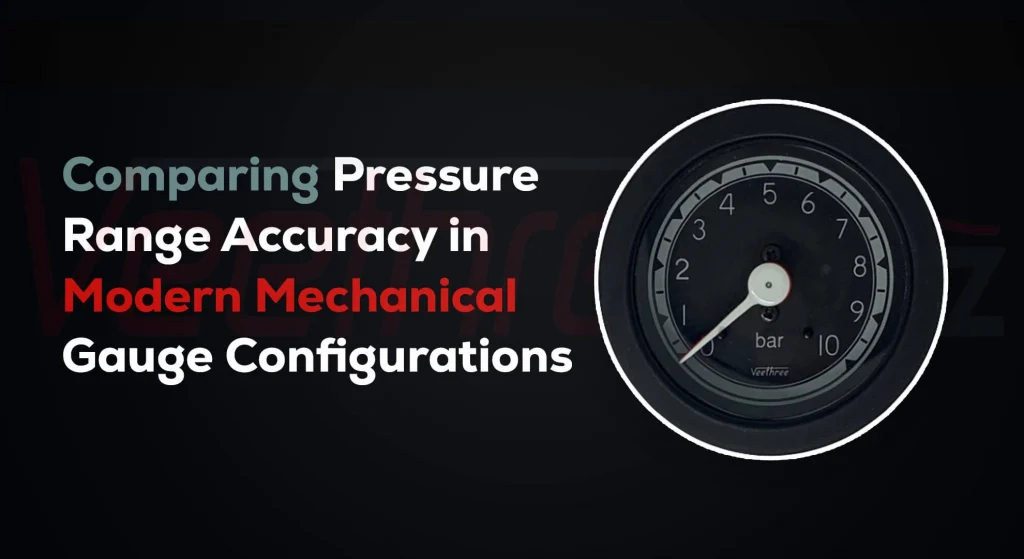
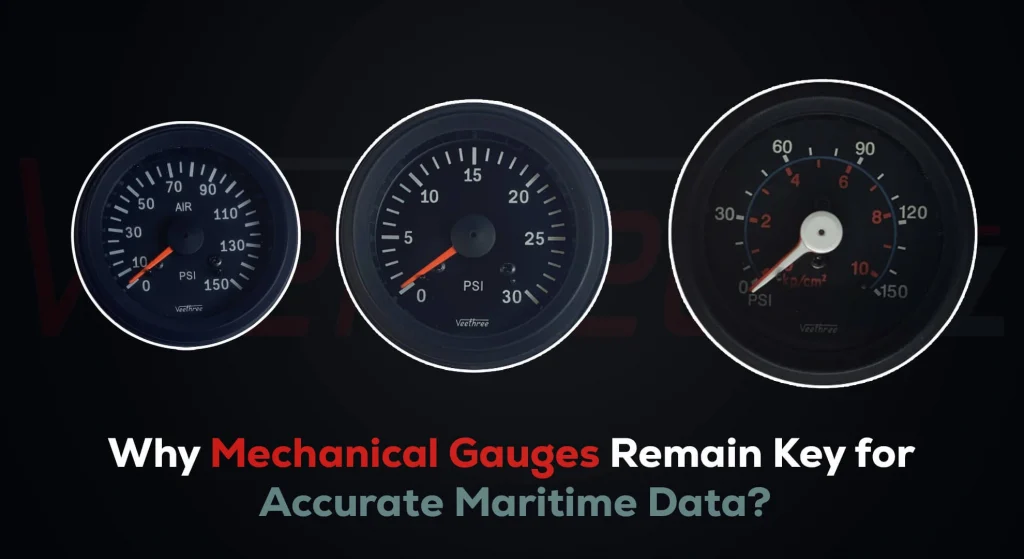
If you want a solid example of a marine pressure gauge mechanical option in Veethree’s range, look at their 52mm oil pressure gauge format. One example is a 0 to 150 PSI mechanical pressure gauge, perimeter lit, with 1/8″ NPT end fitment.
If the engine is a heart, oil pressure is the blood pressure.
Ignore it and the bill gets rude.
For NZ boating, this also helps when the sea turns sloppy and the engine spends more time changing load. That’s when weak oil pressure shows itself.
Use this keyword naturally in your post copy and on-page elements: marine pressure gauge NZ
2. Water temperature
Overheating is sneaky. It starts small, then it jumps.
A solid marine temperature gauge mechanical setup keeps you ahead of it.
Veethree’s mechanical water temperature gauge example: 52mm, perimeter lit, range 40 to 120C, and a 12 feet capillary option with 5/8″ 18 UNF end fitment plus adapters.
That capillary length matters on boats. It gives real routing flexibility from engine to dash without doing weird bends that ruin your day.
Use this keyword naturally too: marine temperature gauge NZ
3. Fuel pressure
When fuel pressure drops, engines don’t always fail dramatically.
Sometimes they just run rough, lose power, or act unpredictable right when you need smooth control.
Veethree’s mechanical fuel pressure gauge example: 52mm, 0 to 100 PSI, perimeter lit, 1/8″ NPT end fitment.
That’s a clean fit for many engine bay setups, and it sits nicely alongside other analog gauges on the dash.
If you’re building out boat engine gauges analog, fuel pressure is the one people skip… then regret.
4. Boost and vacuum for turbo engines
Not every boat needs this. Turbo diesels do.
A boost and vacuum gauge tells you if the engine is breathing right under load.
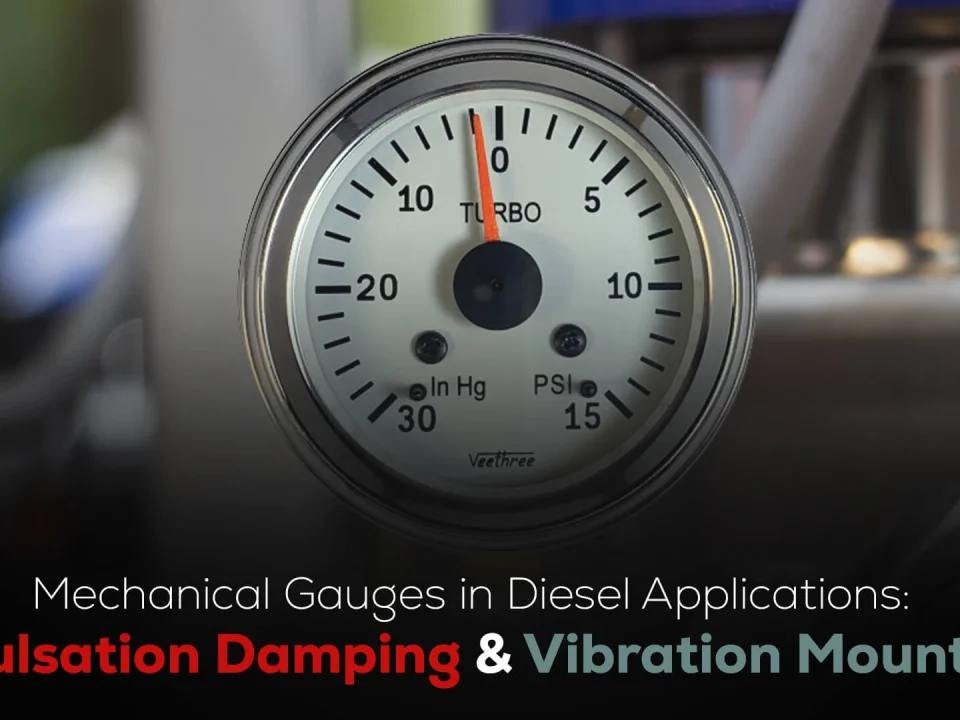
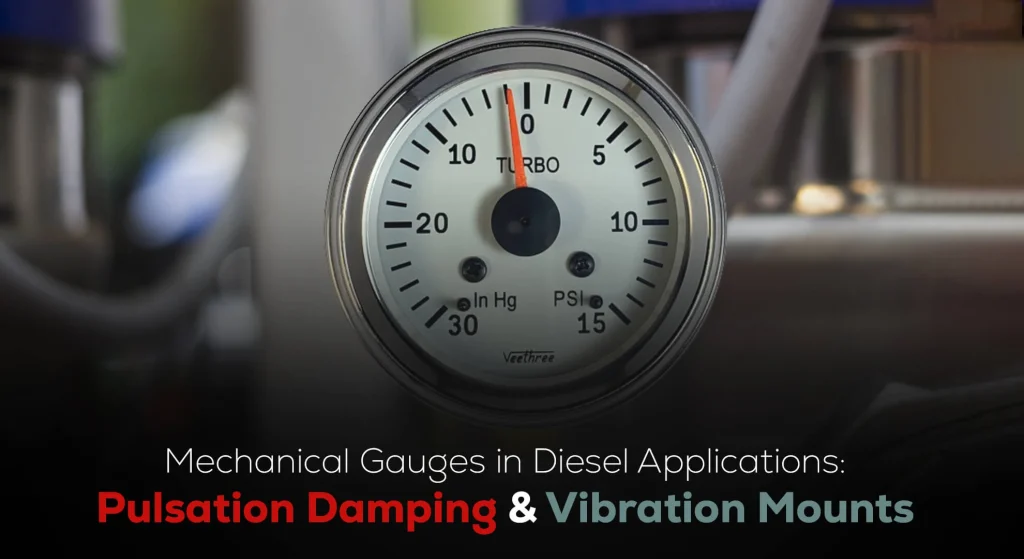
Veethree has a 52mm mechanical Boost/Vacuum gauge example that reads 0 to 15 PSI boost and 0 to 30 in Hg vacuum, perimeter lit, 1/8″ NPT end fitment, and it comes bundled with a tubing kit.
And if you want the kit details on its own, Veethree’s boost gauge tubing kit includes 6 feet tubing and brass fittings, built for mechanical pressure, boost, and vacuum gauge installs.
This is one of those gauges that saves time. When something feels off, it helps you separate “sea conditions” from “engine problem” fast.
The safety upgrades most people miss: a temperature gauge with a switch
Here’s the move that feels like cheating.
A mechanical temperature gauge that also trips an alarm or shutdown circuit.
Veethree sells a mechanical temperature switch gauge with a built-in electrical switch for tripping alarms and or shutdown devices, with a sealed capillary tube and sensing bulb.
That’s not about staring at a dial all day.
That’s about getting a clear warning when attention is on the water, not the dashboard.
This fits naturally under: best mechanical gauges for marine engines
What to look for when choosing Mechanical Gauges for NZ boats
Keep the dash readable in one second
If it takes longer than a glance, it fails its job.
Veethree’s mechanical gauges consistently show up in marine friendly formats like 52mm, with perimeter lighting on common pressure and temperature models.
So, your dash stays consistent, and your eyes don’t work overtime.
Pick the right “fit” first
Before style, before colour, before anything.
Match the connection and routing needs:
- Pressure gauges often use 1/8″ NPT end fitments in the mechanical range examples.
- Mechanical temp gauges use capillary tubes and engine side fittings, and Veethree lists these clearly per model.
- If you are running boost or vacuum lines, use the proper tubing kit designed for the job.
Don’t ignore the basics
Veethree’s mechanical gauges category is built around pressure and temperature monitoring for marine use.
That’s exactly where most expensive failures start.
If you only add two gauges, make them oil pressure and water temp.
If you add three, add fuel pressure.
If you run turbo, add boost and vacuum.
That set covers most real-world problems that show up on the water.
Use this keyword naturally through headings and body copy: mechanical gauges NZ
A 5-minute gauge audit before your next trip
Do this once and you’ll stop trusting “seems fine”.
- Turn the key on and confirm every dial wakes up cleanly
- Check for fogged faces or sticky needles
- Watch oil pressure and temp during warm up, not just after you leave the ramp
- If a needle bounces hard in chop, treat it as unreliable data
- Replace the one gauge you keep explaining away
If you keep saying “it’s been like that for ages”, that’s the sign.
Wraping up
NZ boating rewards preparation and punishes guesswork.
Start with the gauges that protect engines:
marine pressure gauge mechanical for oil and fuel
marine temperature gauge mechanical for water temp
Boost and vacuum if you run turbo
A temp switch gauge if you want an automatic warning layer
Veethree NZ’s Mechanical Gauges range is built around those core readings for marine environments.
And Veethree lists a one-year warranty on these product pages, which is a solid baseline expectation for gear that belongs on boats.
Go to Veethree NZ and pull up the Mechanical Gauges category.
Pick the two gauges that would save your engine first.
Then build out the rest like you mean it.
Because the ocean does not care that the gauge “usually works”.