Digital Speedometer Accuracy: Calibration Tips for Better Real-World Readings

Vessel Instrumentation Guide: Starwhite Gauges vs Eclipse Gauges
March 14, 2026
12V vs 24V Electrical Gauges: How to Avoid Expensive Mismatches
May 28, 2026
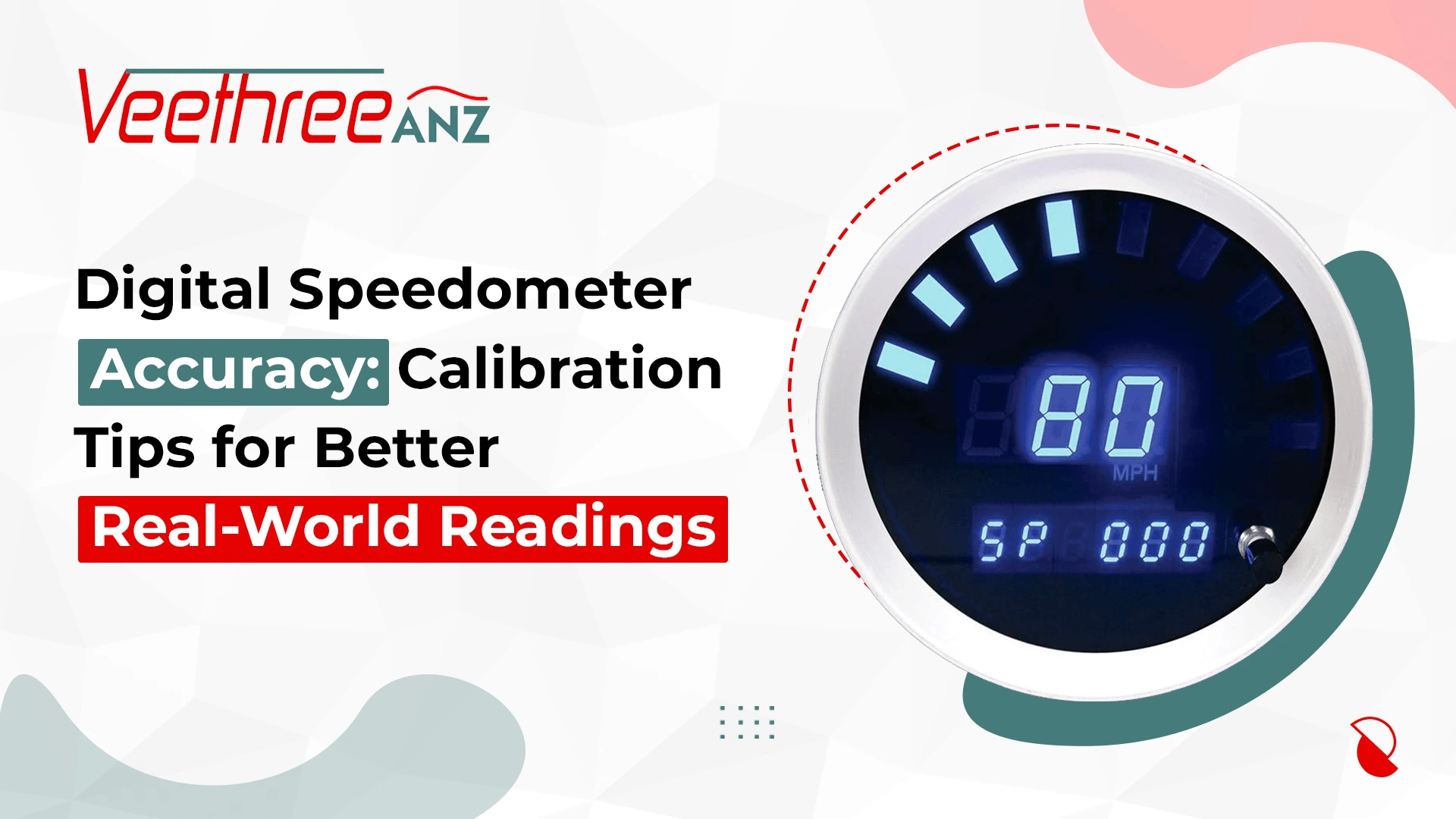
There is a funny little moment that happens after you fit a new Digital Speedometer in NZ. You step back, admire the dash, fire the engine, and for a second it feels like the job is done. Then you take the vehicle out, compare the reading to the road, and realise something important: a speedometer can look perfect long before it reads perfectly.
That is where the real work begins.
At VeeThree NZ, the speedometer options are not one-note or one-size-fits-all. The range includes front-programmable electronic speedometer models with LCD odometer displays and twin trip function, plus GPS-based units in several styles and ranges, including 200KM speedometer options that come with a GPS receiver. In other words, the hardware is there; the difference between “close enough” and confidence usually comes down to setup, calibration, and choosing the right type of unit for the way the vehicle or vessel is actually used.
Accuracy problems rarely start with the gauge itself
Most people blame the dial first. In reality, inaccurate readings usually begin somewhere upstream.
On a road vehicle, tyre changes are one of the biggest culprits. NZTA notes that fitting tyres with a different diameter from the originals affects both speedometer and odometer accuracy. That matters more than many owners realise, especially on utes, classics, 4x4s and modified builds where wheels and tyres are often changed for stance, clearance or appearance. A brand-new Digital Speedometer in NZ can still give you disappointing real-world readings if the system around it has changed and nobody has recalibrated for that change.
On an electronically driven setup, the next common issue is the signal source. VeeThree’s programmable speedometer listings are very clear here: these units do not come with a speed sensor, and they are designed to work with a Hall Effect speed sensor. One listed programmable model also notes the speed sensor should output 8 pulses per revolution, while another shows a wider programmable pulse range. That tells you something practical: calibration is not guesswork, and not every sensor/setup behaves the same way. Model choice and sensor compatibility matter from day one.
The first smart decision: choose the right speedometer type
Before anyone talks about speedometer calibration, the better question is this: are you calibrating the right style of speedometer for the job?
If the vehicle has a modified drivetrain, non-standard tyre size, or a setup where pulses can vary from what the original dash expected, a programmable speedometer makes a lot of sense. VeeThree’s front-programmable units can be calibrated either by driving a measured 1 km distance or by entering known pulses per kilometre. That is a practical feature, not a brochure flourish. It gives builders and owners a way to tune the gauge to the vehicle rather than forcing the vehicle to suit the gauge.
On the other hand, if you want to sidestep wheel and driveline variables entirely, a GPS speedometer can be the cleaner answer. VeeThree NZ lists multiple GPS speedometers with included receivers, including 60 mph and 200 km/h variants. In plain language, that means the speed signal is not relying on tyre circumference or pulse counts from a separate sensor in the same way a traditional electronic setup does. For many marine applications, and for some custom automotive applications where regulations and fitment are confirmed with an auto electrician, that can make real-world readings simpler to trust.
Calibration tips that genuinely improve real-world readings
1. Calibrate after tyre changes, not just after installation
This is the mistake that keeps coming back. The gauge gets calibrated once, then the vehicle gets new rubber, a different wheel package, or a driveline tweak, and the owner assumes the old setup still applies. It often does not. NZTA specifically warns that tyre diameter changes affect speedometer and odometer accuracy, so recalibration should be treated as part of the modification, not as an optional finishing touch.
2. Use the measured-distance method carefully
VeeThree’s programmable speedometers can be calibrated by driving a measured 1 km distance. That sounds simple, but it pays to be fussy here. A rough estimate, a poorly marked section of road, or an inconsistent pace can bake small errors into the system. The better approach is to use a properly measured stretch, keep the run smooth, and repeat the test rather than trusting a rushed first pass. When accuracy matters, patience is cheaper than living with a speedo that is always a little bit off.
3. Enter known pulses correctly if you have the data
The second calibration route on VeeThree’s programmable units is by feeding known pulses per kilometre. This is usually the cleaner method when you know the sensor output and the drivetrain maths is confirmed. But it only works well if the numbers are right. A tiny assumption error at the start becomes a constant error on the road. That is one reason VeeThree recommends calibration be checked by an approved auto electrician before vehicle use.
4. Never ignore sensor compatibility
A good electronic speedometer is only as trustworthy as the signal feeding it. VeeThree’s product notes repeatedly mention Hall Effect speed sensor compatibility. That is not filler copy. Fit the wrong sensor type, use the wrong pulse output, or mix components casually, and you can end up chasing an “accuracy problem” that is really a compatibility problem. The cleanest installs nearly always start with matched parts and a clear signal path.
5. Clean power and grounding matter more than most people think
Bad readings are not always a calibration issue. Sometimes the gauge is being fed a messy electrical signal. VeeThree’s own troubleshooting advice for digital gauges points to poor earthing, voltage drop, wiring routed near interference, and noisy signal paths as common causes of drifting, jittery or inconsistent readings. That is a useful reminder for anyone fitting digital gauges NZ customers often install in boats, classics and custom builds: before blaming the dial, check the wiring discipline behind it.
6. Keep moisture, corrosion and loose connections out of the equation
This matters even more in marine environments, but it is hardly irrelevant on the road. VeeThree’s GPS speedometers note features like corrosion-resistant bezels, scratch-resistant lenses and brass terminal connectors on some models, and their maintenance content stresses keeping wiring and connection points dry and secure. Real-world accuracy is not just about initial calibration. It is also about protecting the integrity of the signal over time.
When GPS makes more sense
A GPS speedometer is especially attractive when you want a clean install with fewer mechanical or drivetrain variables shaping the reading. VeeThree NZ’s GPS units are available in multiple styles and ranges, including 200 km/h versions that fit naturally for NZ users who think in metric, while one of VeeThree’s own buying guides notes that the 200 km/h GPS model is the natural pick if you work in km/h rather than mph. For boats, that choice is particularly logical. For road-going automotive applications, VeeThree advises confirming licensing requirements with an auto electrician first.
There is also a more human reason people like GPS-based units: they reduce the mental clutter. You are not constantly wondering whether that diff swap, tyre upgrade or rolling diameter change has nudged the reading out of line again. For the right build, that simplicity is worth a lot.
When a programmable speedometer is the better fit
A programmable speedometer shines when you want integration with the rest of the dash, when you already have an electronic sender arrangement, or when the vehicle is custom enough that you want control rather than a one-path solution. VeeThree’s front-programmable models offer LCD odometer displays, twin trip function, and calibration flexibility through measured distance or pulse entry. That makes them especially useful in modified vehicles where the “standard” setup disappeared years ago.
There is a satisfying honesty to that kind of instrument. It does not pretend the vehicle is factory standard. It gives you the tools to make the reading suit the machine you have actually built.
The small details that separate a decent result from a sharp one
A lot of accuracy problems come from rushing the boring parts. Routing wires too close to noisy circuits. Assuming all senders play nicely together. Skipping the post-install road test. Ignoring lighting, readability and visibility at night. VeeThree’s speedometer and gauge range shows that they think in complete packages, not just in isolated instruments, whether that is a single digital speedometer, a speedo/tacho combo gauge, or a full gauge set built around a GPS speedo. The best outcomes usually come when owners think the same way.
Because that is the truth of it: speedometer accuracy is not magic. It is the result of matching the right product to the right application, calibrating it properly, and respecting the details that keep the reading honest in the real world.
Final word
A good Digital Speedometer in NZ should do more than light up the dash nicely. It should earn your trust every time you glance at it.
If the setup is road-based and likely to change with tyres, wheels or drivetrain modifications, treat speedometer calibration as part of normal maintenance, not a one-off job. If you want to minimise those variables, a GPS speedometer from VeeThree’s range may be the smarter path. If you need flexibility and a tailored fit for a custom build, a VeeThree electronic speedometer or programmable speedometer gives you exactly that. Either way, the best readings do not happen by accident. They come from choosing carefully, installing cleanly, and calibrating with intent.
FAQs